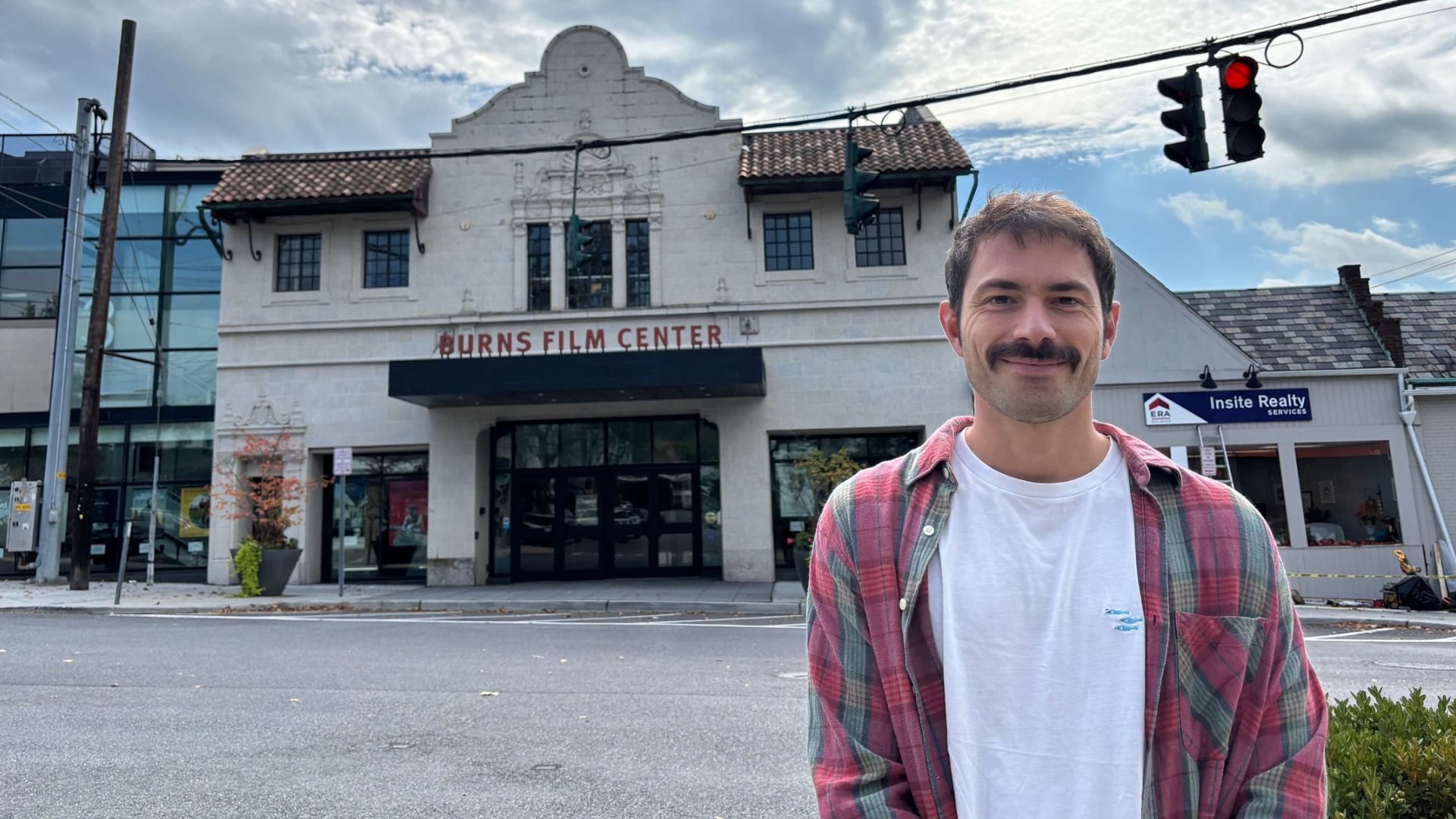
Posted October 27, 2026
Artist-in-Residence: Beniamino Barrese
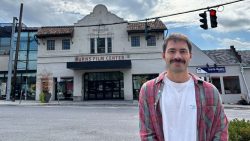
As part of our ongoing interviews with Artists-in-Residence at the Burns, we caught up with filmmaker Beniamino Barrese to discuss his current work-in-progress. Along with editor Valentina Cicogna and producer Harry Vaugh are working on Beniamino’s new film The Calling, the second chapter of a diptych that began with Barrese’s first film, The Disappearance of My Mother. The Calling was awarded the JBFC Residency at the 2026 DOK CPH Forum in Copenhagen.
- How did this residency come about, and how did you learn about the Burns?
I was pitching the new film I’m developing together with producer Harry Vaugh (Real Lava) at the CPH Forum in Copenhagen. Eric Hynes, who was already familiar with my work, came across our project there and decided to offer us this incredible opportunity.
- Can you tell us a bit about the film you are working on during your residency?
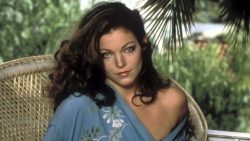
Sure. Its working title is “The Calling”, and it’s the second chapter of a diptych that began with my first film, “The Disappearance of My Mother”. That film explored the character of my mother, Benedetta Barzini, a former top model, feminist, and professor, and her desire to “disappear” and withdraw from the world and the male gaze. This second chapter focuses instead on my father, Antonio Barrese, an artist striving to achieve the recognition he feels was unjustly denied him throughout his life and to defend his legacy. Through this film, I want to confront questions of masculinity, men’s desperate need for validation, and the relationship between art and the powers that finance and legitimise it. Together, these two films tell a single story divided into two parts, hopefully echoing and mirroring each other in both form and content. They explore two major archetypes we all somehow contend with: the mother and the father, but also the woman and the man. Like my first film, The Calling also questions the process of image-making, the inevitable power imbalances and struggles between the person being filmed and the person behind the camera, and our dependence on images. Images can help us make sense of the painful chaos of everyday life, but they can also become tools of control, conformity, and compliance.
- What are some of the most interesting things you’ve learned while working on your film?
Each film, for me, is an experience of re-learning how to see. Through this one, I am learning to look at my father differently—and, through him, to recognise myself and the patterns that bind us together, despite our differences and the fights we’ve always had. This common ground is what I am beginning to recognise as the “masculine”: a set of rigid assumptions and cultural conditions that have pressured both of us into being “men” in a very specific way. Coming to terms with the pervasive grip of patriarchy –which is difficult to escape even as a Queer man who has spent a long time deconstructing his own relationship with masculinity—has been one of the film’s most important lessons. It has made me realise how deeply these patterns are ingrained, and how much effort it takes to recognise them within ourselves. Along the way, I am also discovering my father anew. I’m beginning to understand what a remarkable artist he is, while also seeing him as a charismatic person with a rare genius and an extraordinary, deeply human and fragile personality –someone I had never really given myself the chance to understand and, in fact, to truly “see”.
- What do you want viewers to learn from your film?
My hope is to lead the audience through a similar process of reckoning and transformation to the one I am myself going through as I work on this film—one that might impact how they see themselves as men or women, their own need for validation and power, and their relationships with their fathers and mothers. I would also like this film to put forward a message in defense of art. At a time when culture is being sidelined, boxed in, underfunded, if not outright censored or rendered illegal, I want this film to stand as a testament to the importance of art, both of making and of experiencing it. Art is essential to life, as essential as eating, drinking, or making love. Capitalism exploits art for profit, but fails to recognise and understand its true potential. In fact, I believe it ultimately seeks to thwart that potential, because every authentic work of art carries a danger for the system—it questions it, it helps to reconnect to yourself, it creates communities allowing people to leave their isolation and form a shared ground.
- If you had not had this opportunity, how would you go about completing your film project(s)?
We currently have very little financing in place—which means that finding the time to actually work on it has been a real struggle. Having the time to sit down together with collaborators Valentina Cicogna, co-writer and editor, and Harry Vaughn, producer, is just absolutely invaluable. Without this opportunity, we would have had to wait until we could hopefully secure funding in Italy, allowing us to carve out the time to work on editing some scenes—which in turn will help to access more funds. Making a film (and even more so a documentary) is of course a very challenging path, one that requires a great deal of patience, endurance, and even faith. Getting an opportunity like this one at the Burns is therefore just a total game changer, and we are so grateful for being here.
- Which filmmakers or artists do you most admire/draw inspiration from?
This is never a simple answer for me, there are so many authors I love. I will put down some names. I love the work of John Cassavetes, the Dardenne Brothers, Tsai Ming Liang, and Andrea Pallaoro. A Woman Under the Influence (Cassavetes), Paris, Texas (Wenders), The Conformist (Bertolucci), Rocco and His Brothers (Visconti), the cinema of Antonioni, of Alice Rorwacher—all had a huge impact on me. I also draw a lot of inspiration from filmmakers and artists who merge the approach of documentary and fiction—such as recently Kaouther Ben Hania (Four Daughters), or Peter Middleton and James Spinney (Notes on Blindness). One of my favorite books is by Italian writer Elsa Morante, and is called L’isola di Arturo. I also love photography and visual arts but I don’t really know where to start from in making a sensible list.
- Is there anything else you’d like to add?
First of all, I’d love to thank Eric for trusting us with this invaluable opportunity. Vale and I have been so happy and excited to have the time and space to work here. We’re also deeply grateful to the whole team at Jacob Burns Film Center— MJ and Chris, Claudia, and everyone else who has supported us. A huge thank you also goes to the CPH Forum team, because without their selection of our project for the pitch, we wouldn’t be here. And I’d personally like to thank our producer, Harry Vaughn, who was the first person to believe that this project could make sense, and Valentina Cicogna, my partner in crime, co-writer and editor. For us three, this is truly a shared journey. We are a team, and this is so rare and, again, invaluable. I’d also like to share something more personal. I’ve always had a complicated relationship with the United States, for both personal and political reasons. It’s a place where my mum spent part of her life—first as a child, and later, in the 1960s, working as a model. Those experiences left her deeply scarred and traumatised, and somehow, some of that pain and harsh judgment was passed on to me. Then, as a politically engaged teenager, following the invasion of Iraq in 2003, I decided to stop watching American films as a form of cultural boycott—a very mild one, I know. And I stuck to it until the end of high school. Yet, almost ironically, this country, which I had so strongly contested, has continued to be incredibly generous to me. I first started coming to New York because I was looking for traces of my mum. I met Gerard Malanga, Warhol’s assistant, and explored the places and atmospheres of her youth. The city had a magnetic pull on me, and I felt I was healing and reclaiming a part of my own DNA that I had discarded because of my mother’s past. Later, I met Ryot Films, a wonderful production company that ended up financing a third of my first film. Once completed, the film was selected for the Sundance Film Festival, won a Cinema Eye Honors award for Best Debut Feature, and secured theatrical distribution with Kino Lorber—even before finding a distributor in Italy. A few years later, I began a three-year, long-distance relationship with an amazing man who lives in Los Angeles, where I ended up spending long periods of time. And now, this residency. Through all these experiences, I’ve been forced to confront my own judgments and prejudices, and to reconsider, deconstruct, and grow. I’ve come to love so many things about this incredibly rich and diverse country, with all its insane contradictions. Being here continues to teach me so much about the crazy world we live in: its violence and resistance, its ugliness and beauty. I’m deeply grateful for the opportunities this country has given me, and for the ways in which they have challenged me to grow.